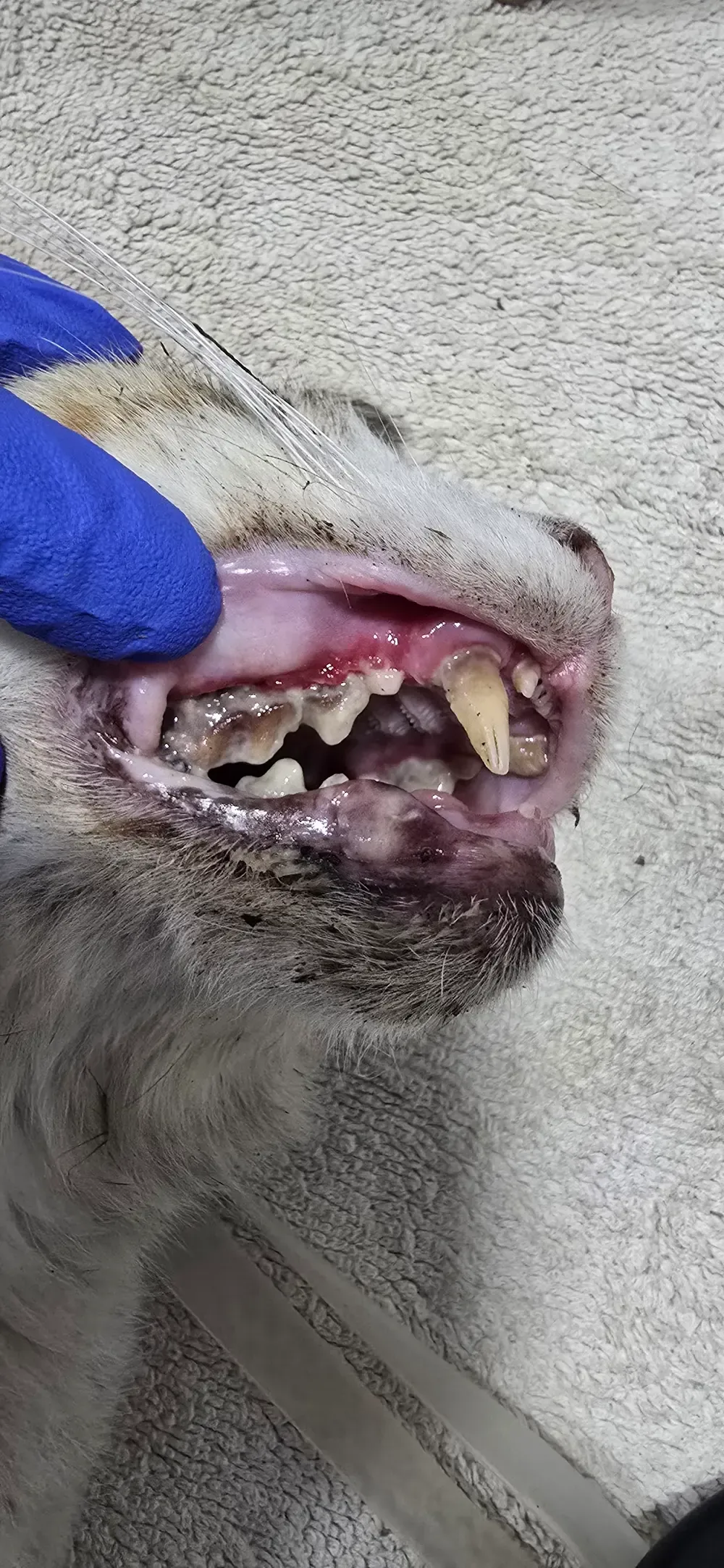
Why the mouth deserves its own attention
Dental disease is progressive and, in its early stages, barely shows any visible symptoms. By the time clear signs appear (noticeably bad breath, heavy tartar, discomfort while eating), plaque and tartar have usually already built up below the gum line.
That’s why many veterinary guidelines recommend checking the mouth at every visit, not just when something at home has already caught your attention.
Signs worth watching for
- Persistent bad breath, beyond the usual.
- Visible tartar, especially on the back teeth.
- Red, swollen gums, or gums that bleed easily.
- Difficulty, slowness or apparent pain while chewing.
- Excessive drooling or partly refusing food, especially if they prefer soft food.
- Rubbing their face with their paws more often than usual.
What we check at a dental review
We assess the state of the teeth and gums, and explain whether a professional clean is advisable or whether reinforcing home care is enough. The decision depends on each mouth — there is no single answer for every animal.
Home care, with caution
Toothbrushing, introduced gradually and with patience, is the habit with the strongest evidence behind it. We do not recommend trying to remove tartar at home with household tools: it can damage the enamel or gums without solving the underlying problem. Raise any questions about specific products or routines at a consultation.