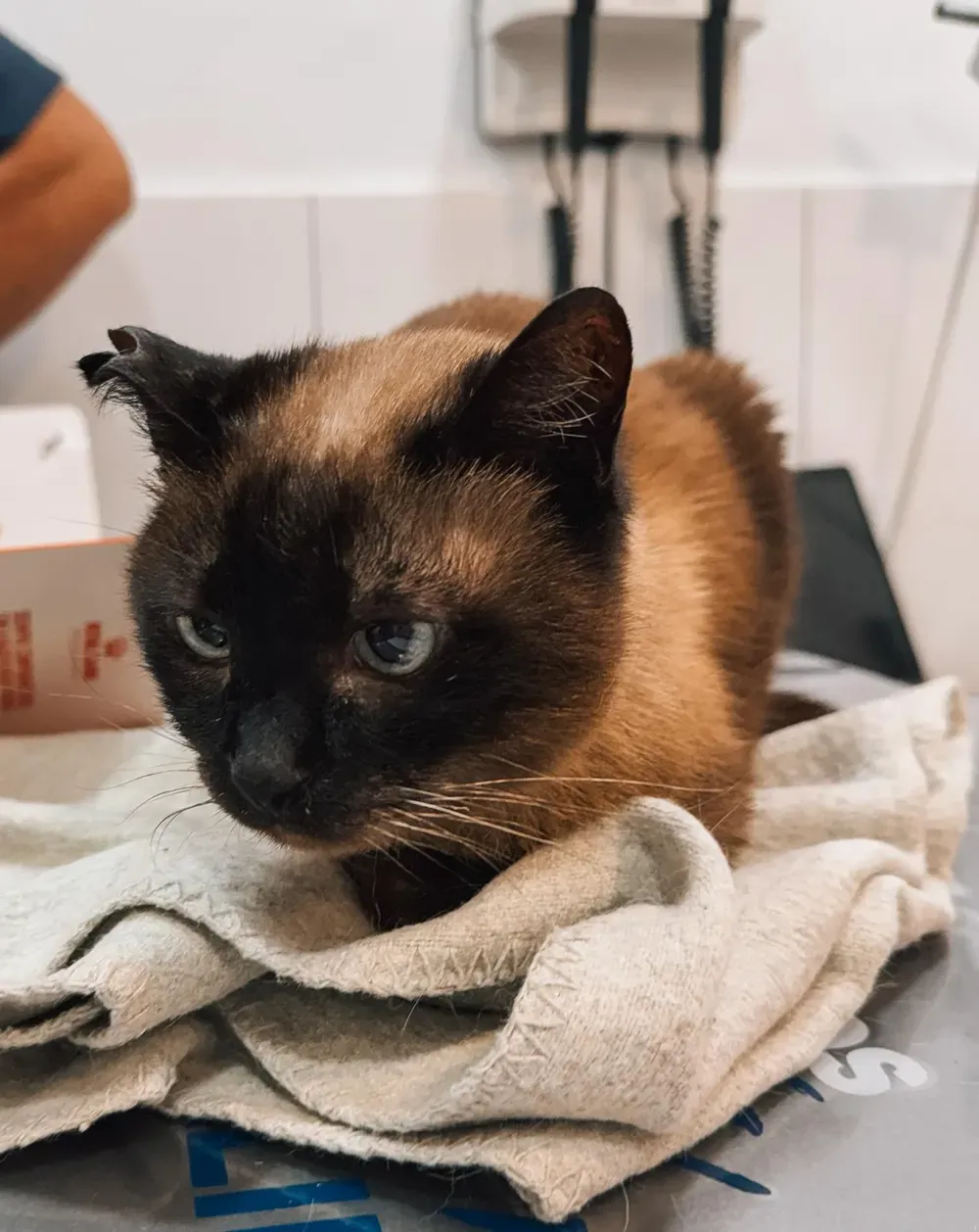
Senior cats hide changes too
An older cat who meows more, sleeps differently or moves more carefully isn’t necessarily "just getting old": these changes are often how they express that something isn’t quite right.
Signs worth watching for
- New meowing, more frequent or at unusual times, especially at night.
- Litter tray changes: frequency, amount, or accidents outside the tray.
- Weight or muscle loss, even if appetite is maintained.
- Reduced ability to jump or climb to high places.
- Changes in the coat or less grooming than usual.
- Increased irritability, disorientation, or changes in how they interact with you.
Why these changes shouldn’t be "normalised"
Behind these signs there can be processes that, caught early, are managed much better. That’s why for senior cats we recommend six-monthly or more frequent check-ups, rather than waiting for the annual one.
Simple adaptations at home
A low-sided litter tray, water accessible in several spots around the house, warm beds, and avoiding sudden changes to routine or furniture tend to make life more comfortable for them.